Als Zeichen für den intensiven Fortschritt der künstlichen Intelligenz bei der Nachbildung utopischer Szenarien und Charaktere blieb diesmal auch „Der Vater der Museen“ nicht verschont, Juan Enrique Brüning, ein Deutscher, der Ende des 19. Jahrhunderts in Peru lebte und sich widmete 50 Jahre seines Lebens dokumentieren mit Fotografien, Aufnahmen und Notizen die gesamte Kultur Nordperus.
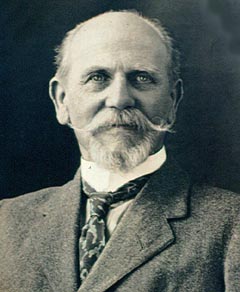
Hans Heinrich Brúning es conocido, entre otros méritos, por haber salvado del olvido a la ancestral cultura e idioma Mochica
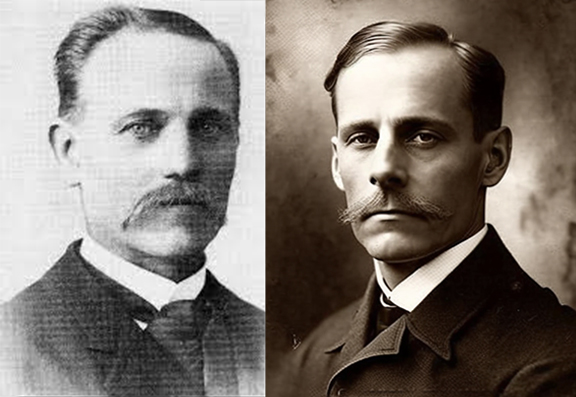
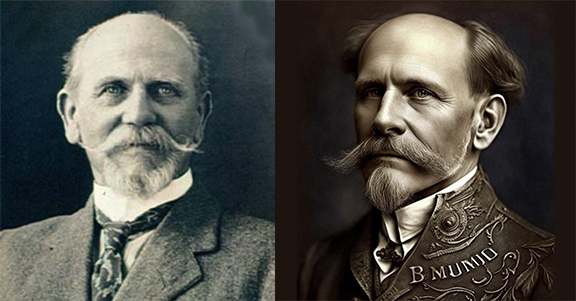
Der proklamierte Vater der Museen von Peru wurde von KI neu interpretiert und das Ergebnis ist sehr eigenartig: Anstatt ein ähnliches Image zu erreichen, hat er es anscheinend vorgezogen, Charaktere zu platzieren, die eher wie Schauspieler aussehen, die bereit sind, ihn in einem zukünftigen Film zu interpretieren .
Links das Originalfoto eines jungen Hans Heinrich Brüning und Rechte der Interpretation künstlicher Intelligenz.
Genau diese gewonnenen Modelle dienen der Entwicklung des Moodboards des Projekts „El Lambayeque de Brüning“, dessen Leiter Jhalil J. Moreno umsetzt.
„AI hilft sehr beim Casting, als Ergänzung zu anderen Ressourcen, seien es Konzeptkunst oder Referenzfotografien. Es wird empfohlen, es wegen seiner Vielseitigkeit und Kosteneinsparungen zu verwenden, wir hoffen, dass es im Laufe der Zeit eine genauere Bilderzeugung erreichen wird Prozesse“.
Jhalil Moreno. Leiter des Projekts El Lambayeque de Brüning.
Links das meist erinnerte Bild des Deutschen, rechts die Interpretation der KI.
Es ist auch kurios, wie AI Lambayeque des 19. Jahrhunderts konzipiert hat. Das ist definitiv erst der Anfang. Es hat sich bereits als nützliche Ressource für Filmemacher erwiesen.
Lambayeque Ende des 19. Jahrhunderts laut IA.
Wenn Sie mehr über das Filmprojekt erfahren möchten, können Sie es über den folgenden Link erreichen:
As a sign of the intense progress of artificial intelligence in recreating utopian scenarios and characters, this time "The Father of Museums" was not spared, Hans Heinrich Brüning, a German living in Peru at the end of the 19th century and who dedicated 50 years of his life to document with photographs, recordings and notes the entire culture of northern Peru.
Hans Heinrich Brüning es conocido, entre otros méritos, por haber salvado del olvido a la ancestral cultura e idioma Mochica.
The German has been reinterpreted by the AI and the result is very peculiar: it seems that instead of achieving a similar image, he has preferred to place characters that look more like actors ready to play him in a future film.
On the left the original photograph of a young Hans Heinrich Brüning and on the right the interpretation of artificial intelligence.
Precisely these models obtained will serve to develop the moodboard of the project "El Lambayeque de Brüning", whose director Jhalil J. Moreno is carrying out.
"AI helps a lot in casting, as a complement to other resources, be they conceptual arts or referential photographs. It is recommended to use it for its versatility and cost savings, we hope that over time it will achieve more accuracy in its image generation processes ".
Jhalil Moreno. Director of the El Lambayeque de Brüning project.
On the left, the most remembered image of the German, on the right, the interpretation of the AI.
It is also curious how AI has conceived Lambayeque of the 19th century. This is definitely just the beginning. It's already proven how useful it can be as a resource for filmmakers.
Lambayeque Ende des 19. Jahrhunderts laut IA.
If you want to know more about the film project, you can access it through the following link: